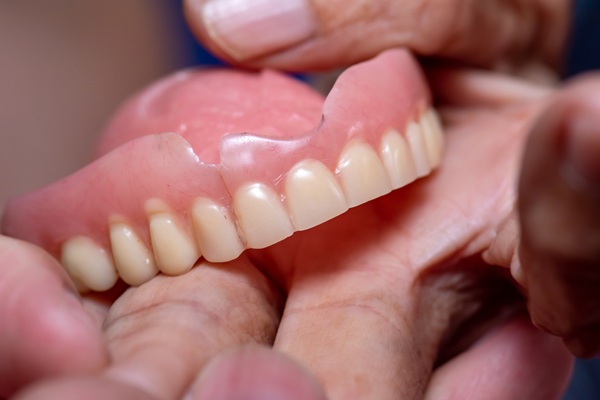
Denture wearers may develop a condition known as stomatitis, an inflammation of the gums and soft tissues underneath dentures. It is most common in people who wear full or partial dentures for long periods, especially those who leave their dentures in while sleeping. Many people do not even realize they have it because it often does not cause pain. However, if left untreated, it can increase the risk of infections and make wearing dentures uncomfortable.
What causes it?
This condition usually results from an overgrowth of Candida, a fungus that naturally lives in the mouth. When dentures are not cleaned properly, bacteria and fungi will begin to build up, leading to irritation. Poorly fitted dentures may also play a role. Trapped food particles or small sores can result from ill-fitting dentures, leading to stomatitis. Also, people with weaker immune systems or conditions like diabetes are more likely to develop this issue.
Signs to look for
Some people do not realize they have the condition, as stomatitis does not always show obvious symptoms and may be challenging to spot. However, some people may notice redness, swelling, or soreness in their gums. Others might see small red spots or feel discomfort when wearing their dentures. In more serious cases, white patches can appear on the gums or the roof of the mouth. Because the symptoms are often mild, regular dental checkups are the best way to catch any issues before they worsen.
How to prevent it
If denture wearers keep their appliances clean and care for their oral hygiene, they can help prevent stomatitis. Simple ways to guard against this condition include the following.
Clean dentures every day
Use a soft-bristled brush and a mild denture cleanser to remove food and plaque. Regular toothpaste is too abrasive and can damage the surface.
Soak dentures overnight
Many denture wearers benefit from soaking them in a cleaning solution while they sleep to help remove bacteria.
Take dentures out before bed
Wearing dentures overnight increases the risk of infection. Giving the gums a break helps keep them healthy.
Visit the dentist regularly
Checkups help ensure dentures fit properly and allow the dentist to spot any early signs of irritation or infection.
Keep the gums clean
Dentists suggest patients brush the gums, tongue, and roof of the mouth each day to help remove bacteria and keep the mouth fresh.
Treatment options
A dentist may recommend an antifungal treatment to get rid of the overgrowth of Candida if a patient develops stomatitis. In some cases, adjusting or replacing poorly fitting dentures may be necessary to prevent further irritation. Practicing good oral hygiene and denture care can also help mild cases clear up on their own. A dentist can offer the best advice on treating the condition and preventing it from returning.
Keeping the mouth healthy with dentures
Denture stomatitis is common. However, patients can take steps to help prevent it. Call today to learn more about denture care and our other services.
Request an appointment here: https://www.sandstondds.com or call Sandston Comprehensive Dentistry at (804) 412-0878 for an appointment in our Sandston office.
Check out what others are saying about our dental services on Yelp: Dentures and Partial Dentures in Sandston, VA.
Related Posts
If you are wondering what type of dentures are right for you, now may be a good time to consider acrylic dentures. Acrylic dentures are made from 100 percent acrylic and unlike other types of dentures, they do not have any metal substructures to offer support. The dentures are ideal for permanent and temporary denture…
Dental bonding uses tooth-colored composite resin to repair small flaws, reshape edges, and refresh a smile with minimal enamel removal. The dentist conditions the surface, places pliable resin, sculpts the contours, then cures and polishes for a seamless blend. Composite resin bonds micromechanically to enamel and dentin, forming a strong bond. Since the technique preserves…
Tooth implants, or dental implants, are a common tooth-replacement option that uses an abutment and a prosthetic, such as a crown, bridge, or fixed dentures. There are three parts to the tooth implant process; however, surgery is required only for the placement of the implants. The other parts involve preparation and restoration. The word "surgery"…
A full mouth reconstruction rebuilds the bite, teeth, and gum health to restore comfortable function and appearance. Patients consider full mouth reconstruction when multiple teeth suffer from decay, fractures, wear, or loss. The process combines restorative and cosmetic dentistry to improve chewing, speech, and jaw balance. Because the mouth works as a system, addressing several…